

American Academy of Religion
The Center for Religion and Cities (CRC) at the American Academy of Religion
Announcing our 2026 Call for Papers
The Religion and Cities Unit welcomes paper and panel proposals for the 2026 annual meeting of the American Academy of Religion in Denver (November 21-24). In addition to the specific calls described below, we welcome submissions that explore the practice of religion in the city, including papers that cover urban design, infrastructure, and architecture; religious approaches to issues of justice, interfaith encounters, and community collaborations; and the practice of religion in public space.
We especially invite submissions that showcase examples of pedagogical interactions with religion and cities; examine case studies from Africa, Asia, and Latin America; and engage the religious landscape of Denver and surrounding communities. In response to the 2026 Presidential theme, we welcome proposals exploring cities as crucibles of religious encounter, innovation, and contestation, where communities forge visions of what is yet possible.
Religion, Urban Ecology, and Environmental Humanities. We invite papers that explore the intersection of religion, urban ecology, and environmental humanities. Proposals might explore religious responses to urban environmental issues such as climate change, pollution, urban wildlife, and reforestation. Papers might also explore local landscapes and ecosystems (especially in Denver), indigenous perspectives on urban land and ecology, the relationship between human beings and other species, and understandings of cities as ecosystems or as in opposition to “the natural world.”
Urban Spaces of Healing. Although rhetoric about cities often focuses on instances of injustice and suffering, urban communities also host spaces of healing and flourishing. We invite papers that consider such spaces, especially as they relate to religious practice, community, and interfaith collaboration. Spaces of healing might include community gardens and parks, gatherings of belonging and mutual support, and examples of activism that strives for local justice and peace.
The Contested City. We seek proposals that examine the contestation of power and meaning within the city and how religious communities navigate or resist these dynamics. Papers might explore the financialization of urban design, the militarization and occupation of cities, and rhetoric about the city in terms of nationalism and national identity. Furthermore, we encourage submissions that engage the relationship between images of the city and religious visions of the future.
Submit proposals on PAPERS. The deadline to submit a proposal for both the online and in-person meetings is March 6, 2026 at 11:59pm EST.
Do you have questions about our CFP? Send us a message at aarreligionandcities@gmail.com.
Responding to ICE Enforcement in Sacred Spaces: We Protect Us
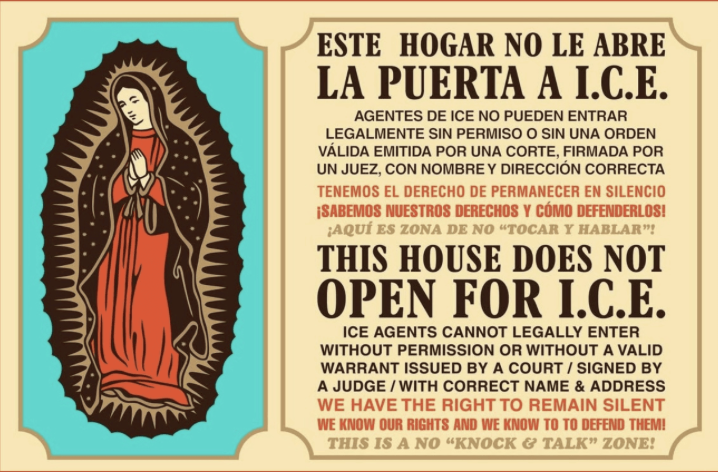
Responding to ICE enforcement in sacred spaces has become an urgent issue as immigration agents increasingly target houses of worship and community centers across the United States. Despite the longstanding tradition of religious communities serving as sanctuaries, recent policy changes and escalated enforcement have led to arrests and threats on sacred grounds, undermining spiritual and community safety. In response, organizations like the American Academy of Religion and the Society of Biblical Literature have issued statements of solidarity and convened emergency panels to coordinate rapid responses and support networks. This article explores the ongoing crisis, the legal and community actions underway, and provides practical steps for individuals and institutions to actively resist and protect vulnerable community members. To learn more about how you can stand with faith communities and promote sanctuary efforts, read the full article linked above.
If and when further incursions on sacred grounds come to pass, rapid response should be informed and intentional. For any of us who have been outraged about these injustices, these four questions from the abolitionist educator Mariame Kaba offer a helpful place to start:
What resources exist so I can better educate myself?
Who is already doing work around this injustice?
Do I have the capacity to offer concrete support and help to them?
How can I be constructive?
We are grateful to share this article and action steps, co-authored by CRC Advisory Board Member, LauraMcTighe, and scholars Lloyd D. Barba, Jennifer Scheper Hughes, Bethany E. Moreton, and Pamela Voekel.
The American Academy of Religion's mission is to foster excellence in the academic study of religion and enhance the public understanding of religion. The Center for Religion and Cities (CRC) is a vital part of the American Academy of Religion (AAR), dedicated to exploring the dynamic intersections of religion, urban life, and social activism. Through fostering scholarly dialogue, community engagement, and innovative research, CRC seeks to deepen understanding of how religious communities shape and are shaped by urban environments worldwide.
As part of the AAR’s broader mission to advance religious studies, CRC emphasizes themes such as urban governance, community activism, social justice, and local knowledge. The Center collaborates with the AAR’s Religion and Cities unit—bringing together academics, practitioners, and community leaders—to facilitate conferences, panels, and resources that highlight the vital role of religion in urban contexts.
CRC’s work promotes interdisciplinary approaches to understanding city life, including topics like urban activism, religious ecology, community-based initiatives, and the role of faith in shaping equitable and inclusive cities. Its ongoing activities and resources aim to inspire collaborative efforts and innovative scholarship that address pressing urban challenges and social transformations.